Introduction
Laser hair removal is widely used in aesthetic clinics, but one treatment approach does not suit every client. Hair thickness, follicle depth, skin tone, and treatment area can all affect the response to laser energy.
Wavelength is therefore an important part of treatment planning. Shorter wavelengths are absorbed more strongly by melanin, while longer wavelengths can penetrate deeper into the skin. Each wavelength has its own strengths and limitations.
Modern diode laser systems often combine 755nm, 808nm, 940nm, and 1064nm wavelengths. This gives clinics more flexibility when treating different hair types, follicle depths, and skin tones.
Why Diode Laser Wavelength Matters in Hair Removal
Diode laser hair removal is based on the principle of selective photothermolysis. The laser delivers controlled light energy that is absorbed by melanin in the hair follicle, converting light energy into heat to target the follicle while limiting unnecessary thermal impact on surrounding tissue.
The wavelength determines how laser energy interacts with the skin:
- Shorter wavelengths generally have higher melanin absorption and shallower penetration.
- Longer wavelengths usually penetrate deeper into the skin with lower melanin absorption.
These differences affect how deeply the energy reaches the follicle and how it interacts with epidermal melanin. Since hair follicles vary in depth and hair characteristics differ between individuals, a single wavelength may not provide the same level of flexibility for every treatment scenario.
To overcome these limitations, manufacturers have developed multi-wavelength diode laser platforms that allow practitioners to select different wavelengths according to hair characteristics, follicle depth, and skin type.
How Different Diode Laser Wavelengths Work for Hair Removal
755nm Wavelength: Suitable for Fine and Superficial Hair
The 755nm wavelength has relatively high melanin absorption, making it suitable for finer hair with sufficient pigment absorption and follicles located closer to the skin surface.
Due to its shorter penetration depth, it is often considered suitable for:
- Fine hair
- Superficial hair follicles
- Areas requiring precise energy delivery
However, because epidermal melanin absorbs 755nm energy more strongly than longer wavelengths, treatment parameters should be carefully adjusted according to skin type.
808nm Wavelength: The Classic Choice for General Hair Removal
The 808nm wavelength is one of the most commonly used wavelengths in professional diode laser hair removal systems.
It provides a balanced combination of melanin absorption and penetration depth, making it suitable for a wide range of common treatment areas, including the arms, legs, back, chest, and underarms.
Due to its versatility, 808nm is often considered the foundation wavelength in many diode laser platforms.
940nm Wavelength: A Complementary Wavelength for Treatment Flexibility
The 940nm wavelength provides different absorption and penetration characteristics compared with 755nm and 808nm wavelengths.
In multi-wavelength diode laser systems, 940nm serves as a complementary wavelength between general-purpose 808nm and deeper-penetrating 1064nm. It helps expand treatment flexibility by providing an additional energy profile for different follicle depths and hair characteristics.
1064nm Wavelength: Deeper Penetration for Deep Follicles and Darker Skin Types
The 1064nm wavelength has lower melanin absorption and deeper penetration compared with shorter wavelengths.
These characteristics make it commonly considered for:
- Deeper hair follicles
- Coarser hair
- Darker skin types where epidermal melanin protection is an important consideration
Because 1064nm has relatively lower absorption by epidermal melanin compared with shorter wavelengths, it can provide additional flexibility when treating darker skin tones with appropriate parameters.
Comparison of Different Diode Laser Wavelengths for Hair Removal
| Wavelength | Melanin Absorption | Penetration Depth | Suitable Applications |
| 755nm | Higher absorption | Shallow penetration | Fine hair and superficial follicles |
| 808nm | Balanced absorption | Medium penetration | General hair removal and common treatment areas |
| 940nm | Moderate absorption | Medium-to-deep penetration | Complementary wavelength for different follicle depths |
| 1064nm | Lower absorption | Deep penetration | Deep follicles and darker skin applications |
Why Multi-Wavelength Diode Lasers Offer More Treatment Options
Treating Different Hair Types with One Laser System
Hair characteristics vary widely, from fine and superficial hairs to coarse hairs with deeper follicle structures. A multi-wavelength diode laser combines different wavelength characteristics within one platform, allowing clinics to select suitable treatment parameters for different hair and skin conditions.
Treatment planning can be adjusted according to factors such as hair thickness, follicle depth, treatment area, and skin type. This flexibility helps clinics provide more personalized treatment approaches for a wider range of patients.
Supporting Different Fitzpatrick Skin Types with Wavelength Selection
Skin type is an important consideration in laser hair removal. The Fitzpatrick scale ranges from type I to type VI, and darker skin types require careful control of energy absorption due to higher epidermal melanin content.
Longer wavelengths, such as 1064nm, have deeper penetration and relatively lower melanin absorption compared with shorter wavelengths. When combined with appropriate fluence settings and cooling systems, multi-wavelength diode lasers can provide greater flexibility for treating different skin types.
Improving Clinic Efficiency with One Versatile Platform
For aesthetic clinics, equipment versatility can simplify treatment workflows. A multi-wavelength diode laser combines multiple treatment capabilities into one system, reducing the need for separate platforms for different hair and skin characteristics.
Key advantages include:
- Wider treatment flexibility
- Expanded service capabilities
- Simplified equipment management
- More efficient clinical workflows
By using one versatile platform, clinics can streamline operation processes while supporting a broader range of hair removal applications.
Key Factors to Consider When Choosing a Multi-Wavelength Diode Laser System
Wavelength Configuration and Treatment Flexibility
When selecting a multi-wavelength diode laser system, clinics should first evaluate how the wavelengths are integrated and controlled. A well-designed system should provide appropriate wavelength combinations, stable energy delivery, and suitable parameter adjustment options for different hair types, follicle depths, and skin conditions.
The value of a multi-wavelength platform depends not only on the number of wavelengths but also on how effectively the system applies each wavelength during treatment.
Output Power and Treatment Efficiency
Power output is an important consideration when selecting a professional diode laser hair removal machine. Higher power systems can support more efficient treatment workflows when combined with suitable spot sizes, repetition rates, and cooling performance.
However, power alone does not determine treatment quality. A reliable system should also provide stable energy output, consistent performance, and effective thermal management.
Cooling Technology and Thermal Management
Cooling technology plays an important role in protecting the epidermis and maintaining treatment comfort during diode laser procedures.
Common cooling approaches include:
- Sapphire contact cooling
- Water cooling systems
- Semiconductor cooling technology
An effective cooling system helps control heat accumulation, supports stable energy delivery, and improves the overall treatment experience.
Reliability and Manufacturer Support
For aesthetic clinics, equipment reliability directly affects daily operations and long-term maintenance requirements.
When evaluating a diode laser hair removal system, clinics should consider:
- Cooling system design
- Component quality and durability
- Maintenance requirements
- Technical training and manufacturer support
A professional supplier should provide reliable technical assistance, spare parts support, and after-sales service to help ensure stable system operation.
Advanced 2000W 4-Wavelength Diode Laser Hair Removal Machine: A Professional Solution for Modern Aesthetic Clinics
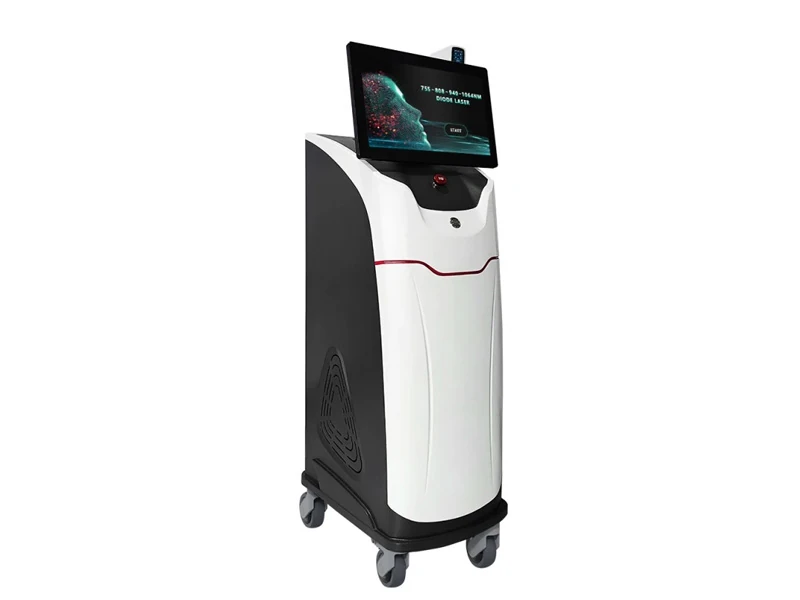
Designed for professional aesthetic clinics, this 4-wavelength diode laser hair removal machine integrates 755nm, 808nm, 940nm, and 1064nm wavelengths into one high-performance platform. By combining multiple wavelength characteristics with 2000W output power, advanced cooling technology, and intelligent operation features, the system provides a versatile solution for different hair removal requirements.
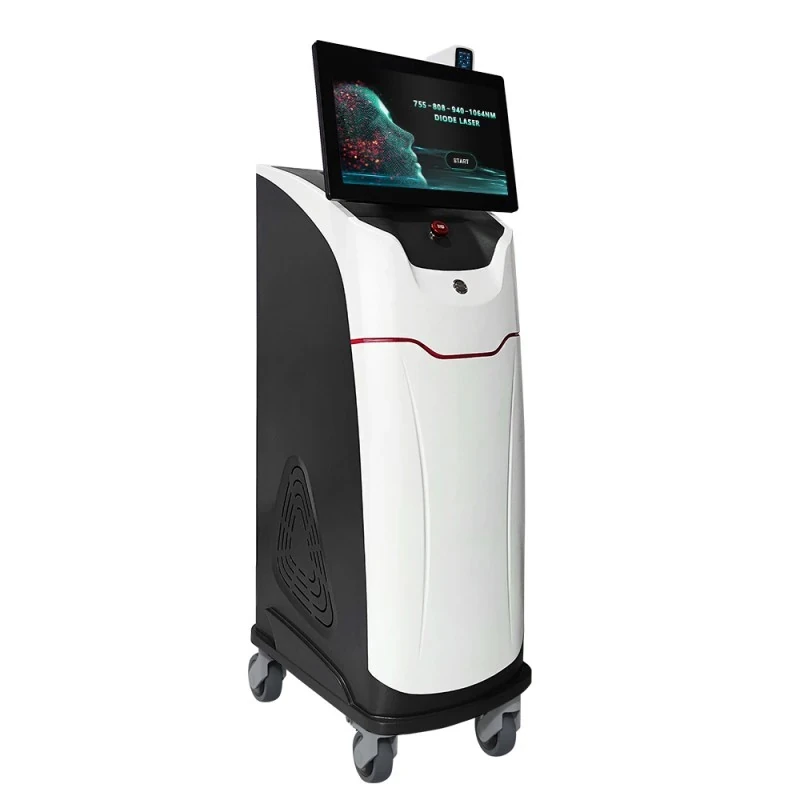
Key Features of the 4-Wavelength Diode Laser System
The system combines:
- Four wavelengths (755nm + 808nm + 940nm + 1064nm) for broader treatment flexibility
- Up to 2000W output power for efficient treatment workflows
- TEC semiconductor cooling, sapphire contact cooling, and air/water cooling for thermal management
- 15.6-inch color touch screen and handle LCD display for convenient operation
- Imported Italian water pump and ion dual-filtration system for stable and low-maintenance operation
Designed for Efficient Clinical Applications
With its multi-wavelength configuration, high-power performance, and intelligent control system, this diode laser hair removal machine is designed to support a wide range of professional applications, including:
- Full-body hair removal
- Facial hair removal
- Underarm and bikini area treatments
- Different hair characteristics and skin conditions
By integrating multiple treatment capabilities into one platform, the system helps aesthetic clinics expand their service range while maintaining efficient daily workflows.
Frequently Asked Questions
Q1: What is the difference between 755nm, 808nm, 940nm, and 1064nm diode lasers?
A: The main difference is their absorption characteristics and penetration depth. Shorter wavelengths such as 755nm generally have higher melanin absorption, while longer wavelengths such as 1064nm penetrate deeper with lower melanin absorption.
Q2: Is a 4-wavelength diode laser better than an 808nm diode laser?
A: A 4-wavelength diode laser provides more flexibility because it combines multiple wavelength characteristics. An 808nm diode laser remains effective for many common applications, while multi-wavelength systems can offer broader treatment options.
Q3: Which diode laser wavelength is suitable for darker skin?
A: Longer wavelengths such as 1064nm are commonly considered more suitable for darker skin types because they have lower melanin absorption compared with shorter wavelengths. However, proper parameter adjustment and professional operation are always important.
Conclusion
Wavelength selection plays an important role in diode laser hair removal because different wavelengths provide different levels of melanin absorption and penetration depth. The 755nm, 808nm, 940nm, and 1064nm wavelengths each have unique characteristics, making them suitable for different hair structures, follicle depths, and clinical needs.
Compared with single-wavelength systems, multi-wavelength diode lasers provide greater flexibility by combining multiple wavelength characteristics in one platform. This allows clinics to adapt treatment approaches according to different patient conditions rather than relying on one wavelength for all applications.
For aesthetic clinics, a multi-wavelength diode laser system offers a versatile approach to professional hair removal by supporting a broader range of treatment needs.