Introduction
Selecting the right laser hair removal technology is a key consideration for aesthetic clinics and medical spas. With growing demand for safe and effective hair reduction treatments, clinics need laser systems that can accommodate different skin types, hair characteristics, and patient needs.
Among professional laser hair removal technologies, 755nm Alexandrite and 1064nm Nd:YAG lasers are two widely used options. Both technologies are based on the principle of selective photothermolysis, where laser energy is absorbed by melanin in the hair follicle and converted into heat to damage the follicle while minimizing injury to surrounding tissues.
However, these two wavelengths have different absorption characteristics and penetration depths, making them suitable for different patient profiles and treatment applications.
For clinics considering a new laser hair removal system, understanding the differences between Alexandrite and Nd:YAG technology can help them choose a solution that better fits their patient base and treatment needs.
755nm Alexandrite Laser: High-Efficiency Hair Removal Technology for Clinics
How Does 755nm Alexandrite Laser Work?
The 755nm Alexandrite laser is a widely used technology in professional hair removal treatments because its wavelength has high absorption by melanin, the pigment responsible for hair color.
During treatment, laser energy is selectively absorbed by melanin in the hair shaft and follicle. The absorbed energy is converted into heat, which damages the follicle and helps reduce future hair regrowth.
Due to its high melanin absorption, the 755nm wavelength can efficiently target hair follicles and support faster treatment sessions when appropriate parameters are applied. Long-pulse Alexandrite lasers are also used in cosmetic dermatology for selected vascular and pigmented lesion treatments beyond hair removal.
Why Clinics Choose Alexandrite Laser for Fast Hair Removal
One of the main advantages of Alexandrite laser technology is its ability to deliver fast and efficient treatments.
The 755nm wavelength is particularly effective for patients with lighter skin tones, especially Fitzpatrick skin types I-IV, where the contrast between hair pigment and skin helps improve treatment precision.
Key advantages include:
- High melanin absorption for efficient follicle targeting
- Faster treatment of large areas
- Suitable for both coarse and finer hair types
- Widely adopted in professional aesthetic practices
For clinics investing in professional aesthetic equipment, alexandrite laser machines remain a popular choice due to their fast treatment speed, reliable performance, and established use in laser hair removal procedures.
Considerations When Using Alexandrite Laser
Although Alexandrite laser has strong melanin absorption, treatment settings must be carefully adjusted for patients with darker skin tones.
Because darker skin contains more epidermal melanin, there is an increased risk of unwanted energy absorption by surrounding tissues if inappropriate parameters are used.
Therefore, clinics need to consider:
- Patient skin type
- Recent tanning history
- Appropriate energy settings
- Cooling technology
For patients with darker skin types, careful parameter selection is essential. Due to its deeper penetration and lower epidermal melanin absorption, 1064nm Nd:YAG laser technology is often considered a suitable option for these patients.
1064nm Nd:YAG Laser: A Versatile Technology for Professional Clinics
How Does 1064nm Nd:YAG Laser Work?
The 1064nm Nd:YAG laser operates at a longer wavelength, allowing deeper penetration into the skin compared with shorter wavelengths.
Due to its lower absorption by epidermal melanin, 1064nm Nd:YAG technology can deliver energy deeper into the skin while reducing unwanted epidermal heating.
This makes it especially valuable for patients with darker skin tones and for treating deeper-lying hair follicles.
Why Nd:YAG Laser Is Suitable for Darker Skin and Deeper Hair Follicles
The main advantage of 1064nm Nd:YAG laser technology is its safety profile for darker skin types.
Compared with shorter wavelengths, 1064nm energy is less strongly absorbed by epidermal melanin, making it suitable for Fitzpatrick skin types V-VI when used with appropriate treatment settings.
Additional advantages include:
- Deeper penetration into hair follicles
- Suitable for darker or tanned skin types
- Ability to treat deeper vascular lesions
- Broader clinical applications beyond hair removal
For clinics serving diverse patient groups, Nd:YAG technology provides greater flexibility in treating different skin types and clinical needs.
Considerations When Using Nd:YAG Laser
While Nd:YAG laser offers strong safety benefits for darker skin types, its lower melanin absorption compared with Alexandrite may require adjusted treatment settings for certain patients.
Clinics should consider:
- Hair thickness and depth
- Patient skin type
- Treatment area
- Required treatment energy
Selecting the appropriate wavelength is not about finding one universal winner, but about choosing the right technology for each clinical situation.
Alexandrite Laser vs Nd:YAG Laser: Key Differences for Hair Removal Clinics
| Feature | 755nm Alexandrite | 1064nm Nd:YAG |
| Wavelength | 755nm | 1064nm |
| Melanin absorption | Higher | Lower |
| Penetration depth | Moderate | Deeper |
| Ideal skin types | Fitzpatrick I-IV | Fitzpatrick V-VI |
| Main advantage | Fast, efficient hair removal | Safe for darker skin |
| Hair follicle targeting | Superficial to medium-depth follicles | Medium to deep follicles |
| Additional applications | Pigmented and vascular lesions | Vascular lesions |
Both technologies have distinct clinical strengths: Alexandrite is valued for its speed and efficiency on lighter skin types, while Nd:YAG provides safer treatment for darker skin tones and deeper follicular targeting.
Choosing the Right Laser Technology Based on Skin Type and Treatment Needs
Alexandrite Laser for Fitzpatrick Skin Types I-IV
For lighter skin types, Alexandrite laser is often selected because its 755nm wavelength is highly absorbed by hair melanin.
Patients with lighter skin and darker hair are often ideal candidates because the contrast between hair pigment and skin allows the laser to selectively target hair follicles.
Nd:YAG Laser for Fitzpatrick Skin Types V-VI
For darker skin types, Nd:YAG laser is commonly preferred because its longer wavelength reduces epidermal melanin absorption.
This allows clinics to serve a wider range of patients while providing safer treatment options.
Why Clinics Need a More Flexible Solution for Diverse Patients
Modern aesthetic clinics often treat patients with different skin types, hair characteristics, and treatment goals. Factors such as skin tone, hair color, hair thickness, and follicle depth can all influence how a laser treatment should be performed.
Because different patients may respond differently to the same wavelength, a single laser technology may not provide the ideal solution for every treatment scenario.
For clinics serving a diverse patient population, having access to flexible laser technology allows practitioners to select the most suitable approach based on individual patient needs.
Why Dual-Wavelength Laser Systems Are Becoming Popular in Aesthetic Clinics
Meeting Diverse Patient Needs with Two Complementary Wavelengths
Modern aesthetic clinics treat patients with different skin types, hair characteristics, and aesthetic goals. A single wavelength may not always be suitable for every patient.
Dual-wavelength laser systems combine two complementary technologies:
- 755nm Alexandrite laser for efficient hair removal in lighter skin types
- 1064nm Nd:YAG laser for darker skin types and deeper-lying hair follicles
By offering multiple wavelength options in one platform, clinics can tailor treatments based on each patient’s skin type and hair characteristics.
Improving Clinic Efficiency with an All-in-One Laser Platform
For professional clinics, treatment flexibility can directly impact daily workflow efficiency.
Instead of relying on separate devices for different treatment requirements, a multi-wavelength laser system allows practitioners to treat a wider range of patients with one integrated platform.
This can help simplify workflow, improve daily efficiency, and provide more consistent treatment approaches for different patient types.
Enhancing Patient Comfort and Expanding Treatment Applications
Beyond wavelength versatility, modern laser systems also focus on improving the overall treatment experience.
Features such as integrated cooling technology and larger spot sizes can help improve patient comfort and treatment efficiency, especially when treating larger areas.
In addition to hair removal, dual-wavelength laser platforms can support other aesthetic applications, including:
- Vascular lesion treatments
- Pigmented lesion treatments
- Skin rejuvenation procedures
This enables clinics to expand their service offerings while maximizing the return on their equipment investment.
How to Choose the Right Laser Hair Removal Technology for Your Clinic
Consider Your Patient Demographics and Treatment Requirements
Before investing in a laser hair removal system, clinics should evaluate their patient demographics and treatment needs. Factors such as the skin types commonly treated, treatment areas, hair characteristics, and expected treatment volume can all influence which technology is most suitable.
For example, clinics serving a diverse patient population may benefit from a system that offers multiple wavelength options. Clinics with a more specific patient base may prioritize technologies that better match their most common treatment needs.
Evaluate Treatment Efficiency, Safety, and Patient Experience
Beyond wavelength selection, clinics should also consider how a laser system performs in daily practice. Treatment speed, cooling technology, spot size options, energy stability, and ease of operation all affect workflow efficiency and treatment comfort.
A well-designed laser system should balance treatment performance, operational convenience, and patient comfort. Features such as advanced cooling systems and flexible spot sizes can help practitioners adapt treatments to different body areas and patient requirements.
Consider Long-Term Investment Value and Clinic Growth Potential
A professional laser hair removal system represents a long-term investment for aesthetic clinics. Instead of focusing only on initial equipment costs, clinics should consider whether the system can support future growth and service expansion.
A versatile platform that supports different patient needs and multiple aesthetic applications can help clinics expand their services and improve operational efficiency over time. Choosing the right technology allows clinics to maintain flexibility as patient needs continue to evolve.
Advanced Dual-Wavelength Laser Hair Removal System for Professional Clinics
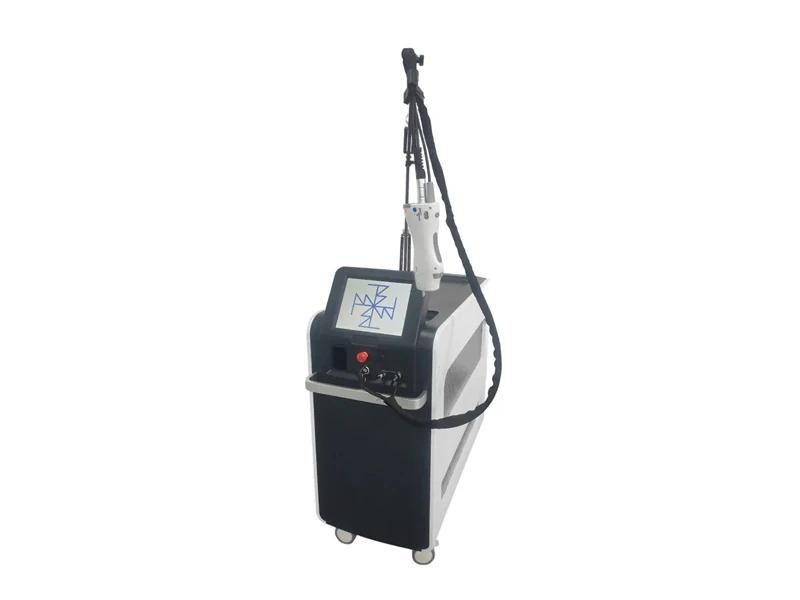
For clinics seeking a versatile solution for different patient needs, Advanced 755nm Alexandrite & 1064nm Long Pulse Nd:YAG Laser Hair Removal System combines 755nm Alexandrite and 1064nm Long Pulse Nd:YAG technologies in one professional platform.
By integrating two complementary wavelengths, the system allows practitioners to select the most suitable treatment approach based on patient skin type, hair characteristics, and clinical requirements.
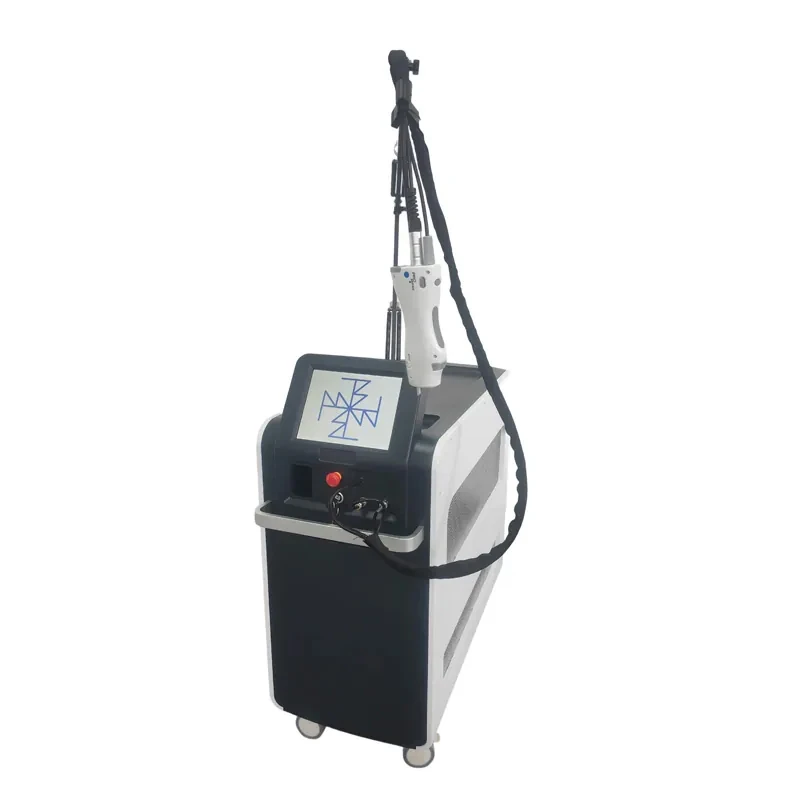
Combining 755nm Alexandrite and 1064nm Nd:YAG Technology in One Platform
This system integrates two complementary laser technologies:
- 755nm Alexandrite laser: Optimized for efficient hair removal in lighter skin types (Fitzpatrick I-IV), where strong melanin absorption supports effective follicle targeting.
- 1064nm Long Pulse Nd:YAG laser: Designed for deeper penetration and safer treatment options for darker skin types (Fitzpatrick V-VI).
By combining both wavelengths in a single system, clinics can provide more personalized treatment options without relying on separate laser platforms for different patient groups.
Faster Treatments and Improved Comfort with 18mm Spot Size and DCD Cooling
Treatment speed and patient comfort are important considerations for busy aesthetic clinics.
The system features an 18mm large spot size, which helps improve efficiency when treating larger areas such as the legs, back, or arms. Multiple spot sizes, including 6mm, 8mm, 10mm, 12mm, 15mm, and 18mm, allow practitioners to adjust treatment delivery for different body areas.
The built-in DCD (Dynamic Cooling Device) cryogen cooling system provides epidermal protection before each laser pulse. By reducing the need for additional cooling gels or topical anesthetics, it can help simplify treatment preparation and improve workflow efficiency.
Expanding Treatment Capabilities Beyond Hair Removal
In addition to professional hair removal applications, this dual-wavelength laser platform can support other aesthetic treatments, including:
- Vascular lesion treatments, such as visible facial vessels and leg veins
- Pigmented lesion treatments, including sun spots and freckles
- Skin rejuvenation applications
With multiple treatment capabilities integrated into one platform, the system helps clinics expand their service offerings while maintaining flexibility for different patient needs.
Frequently Asked Questions
Q1: Is Alexandrite laser better than Nd:YAG laser for hair removal?
A: It depends on the patient. Alexandrite lasers are faster and more efficient for lighter skin types, while Nd:YAG lasers are safer for darker skin and coarser, deeper hair.
Q2: Which laser is safest for dark skin?
A: The 1064nm Nd:YAG laser is widely regarded as the safest choice for darker skin tones. Its longer wavelength bypasses much of the melanin in the epidermis, significantly reducing the risk of burns or discoloration.
Q3: Can one laser hair removal machine treat all skin types?
A: Yes, a dual-wavelength system that combines 755nm Alexandrite and 1064nm Nd:YAG can safely and effectively treat all Fitzpatrick skin types, from very fair to very dark. That’s why many clinics choose integrated platforms instead of investing in two separate machines.
Conclusion
Choosing between 755nm Alexandrite and 1064nm Nd:YAG laser technology is not about finding a single “best” wavelength, but selecting the right solution based on patient needs, treatment goals, and clinic requirements.
The 755nm Alexandrite laser offers high efficiency for suitable lighter skin types, while the 1064nm Nd:YAG laser provides deeper penetration and greater safety advantages for darker skin types. Each technology has its own strengths and plays an important role in professional laser hair removal treatments.
For clinics serving diverse patient populations, a dual-wavelength laser system that combines both technologies can provide greater flexibility, allowing practitioners to customize treatments according to different skin types, hair characteristics, and clinical applications.
By choosing a versatile laser platform, clinics can improve treatment capabilities, enhance patient experience, and better support long-term service growth. Contact JingBow to explore a professional dual-wavelength laser solution designed for modern aesthetic clinics.