Introduction
In the rapidly evolving landscape of medical aesthetics, few technologies have demonstrated the clinical versatility and enduring efficacy of the carbon dioxide laser. Among the various devices available to practitioners, the professional 60W CO2 fractional laser machine is widely used in modern aesthetic practice, offering high-precision treatment for both dermatological resurfacing and gynecological applications. As the global laser resurfacing market continues its robust expansion, the demand for high-powered, multi-application systems continues to grow. This article explores the technical specifications, clinical applications, and unique advantages that define this advanced aesthetic platform, providing practitioners with the comprehensive information needed to make an informed investment decision.
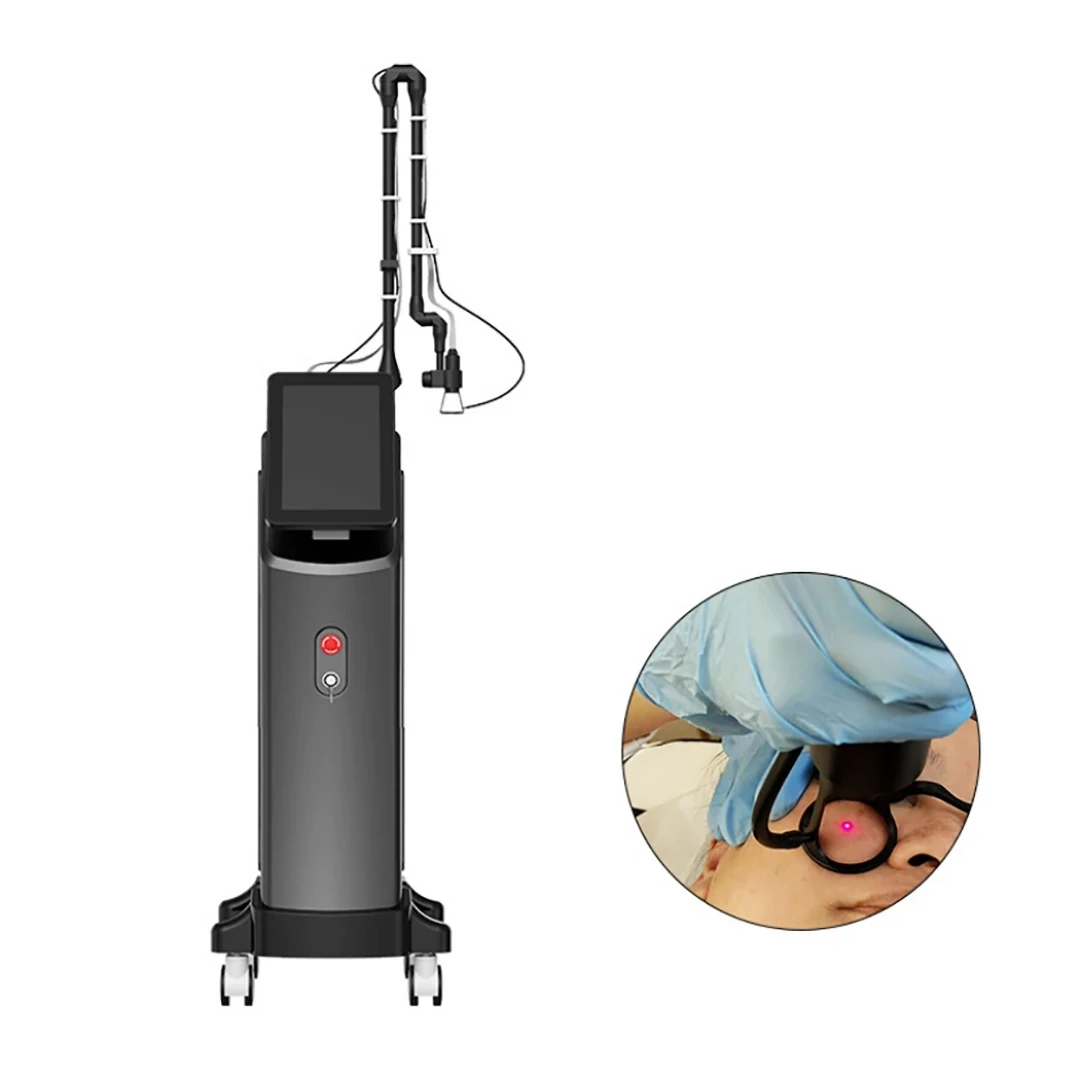
What Is a CO2 Fractional Laser Machine?
At its core, a CO2 fractional laser machine is an ablative laser system that emits light at a wavelength of 10.6μm (10,600nm)—a spectrum that is strongly absorbed by water molecules within biological tissue. According to optical physics research published in the biomedical literature, the 10.6μm wavelength of the CO2 laser is strongly absorbed by water (with an absorption coefficient of α = 250–700 cm⁻¹), and since living tissue is approximately 80% water, this photon energy is readily absorbed and converted into thermal energy, leading to precise tissue vaporization.
The term “fractional” refers to the method by which the laser beam is divided—or fractionated—into hundreds of microscopic beams. When these beams strike the skin’s surface, they create arrays of microscopic thermal wounds known as Microscopic Treatment Zones (MTZs). As defined in the foundational literature on fractional photothermolysis, this technique produces arrays of microscopic thermal wounds at specific depths in the skin without injuring the surrounding tissue. This selective injury pattern is the key innovation that differentiates fractional laser systems from traditional fully ablative lasers.
When the laser energy is delivered in a fractional pattern, the small areas of skin between the MTZs remain completely intact. These untreated “skin bridges” serve as reservoirs of healthy tissue that accelerate healing and reduce downtime. The deliberate thermal injury within each MTZ triggers a triggers a controlled wound-healing response, stimulating fibroblasts to synthesize new collagen and elastin fibers. This process of neocollagenesis is responsible for the skin tightening, wrinkle reduction, and textural improvement that characterize skin rejuvenation outcomes.
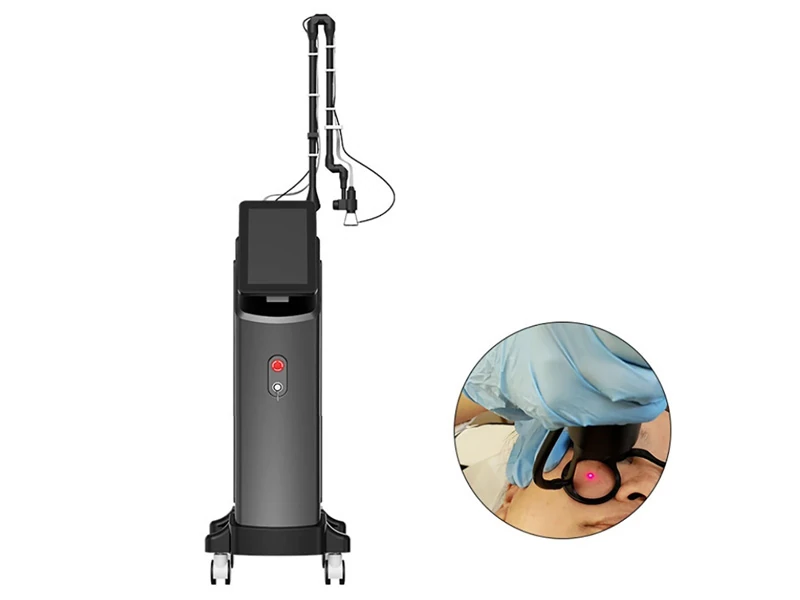
The professional 60W CO2 fractional laser machine described here incorporates a high-performance sealed-off CO2 laser tube, delivering output power adjustable from 1 to 60 watts. This wide power range allows practitioners to tailor treatment parameters precisely—from gentle superficial resurfacing at lower energies to deeper tissue ablation for severe fibrotic scars at higher settings. The system’s optical transmission is accomplished via a sophisticated spring-balanced 7-joint articulated arm, which minimizes energy loss while providing 360-degree flexible operation, essential for lengthy clinical procedures.
Core Technologies: Fractional Resurfacing and Intimate Laser Modes
Fractional Skin Resurfacing
In fractional resurfacing mode, the primary laser beam is divided into microscopic beamlets that create MTZs within the dermis and epidermis. The intense heat generated by each beam instantly vaporizes the target tissue, while the surrounding untreated areas facilitate rapid healing. Clinical studies have demonstrated that CO2 ablative fractional laser treatment effectively reduces static periorbital wrinkles, with one randomized split-face trial reporting an efficacy rate of 68.2% in the Chinese population.
The skin rejuvenation effect achieved through this mechanism is both immediate and progressive. The immediate effect comes from thermal contraction of collagen fibers within the MTZs, while the progressive effect results from long-term neocollagenesis. Research on the molecular effects of fractional carbon dioxide laser resurfacing has suggested that the mechanisms of action are similar for both fractional and fully ablative CO2 laser resurfacing, indicating that practitioners can achieve comparable clinical outcomes with reduced patient downtime.
Intimate Laser (Non-Invasive Vaginal Tightening)
Beyond dermatological applications, the same CO2 fractional laser machine incorporates an Intimate Laser mode specifically designed for non-invasive vaginal rejuvenation procedures . This application utilizes the micro-pulse stimulation effect of the CO2 laser to improve local microcirculation and tissue metabolism. The thermal energy triggers a large number of fibroblasts to synthesize and secrete new collagen fibers and elastin fibers, resulting in significant tissue remodeling that improves vaginal tissue elasticity.
A prospective clinical study published in Lasers in Medical Science evaluated the clinical efficacy of fractional-pixel-CO2 laser for vaginal wall restoration, concluding that the laser treatment may induce restoration of the vaginal epithelium, associated with increased telomere length and cellular proliferation. The study’s histological findings demonstrated significant changes in tissue architecture following treatment, validating the mechanism of action described above.
Key Features and Unique Advantages
| Feature | Specification | Clinical Benefit |
| Laser Type | Sealed-off CO2 Laser | Extended tube life, consistent output |
| Wavelength | 10.6μm (10600nm) | Optimal water absorption, precise ablation |
| Output Power | 1–60W (adjustable) | Versatile from superficial to deep treatments |
| Transmission System | Spring-balanced 7-joint articulated arm | 360° flexibility, minimal energy loss |
| Working Modes | Single, Continuous, Repeat, Super pulse | Adaptable to all indications |
| Aiming Beam | 650nm red diode laser (2mW) | Precision targeting, safety enhancement |
| Display | 12.1-inch color touch screen | Intuitive parameter control |
| Pulse Width | 0.1ms – 10ms | Fine control over thermal damage zone |
| Focused Spot Diameter | ≤ 0.4 mm | High energy density, precise delivery |
When selecting a CO2 fractional laser machine Manufacturer, several distinguishing features set this 60W system apart from lower-powered alternatives. The spring-balanced articulated arm is particularly noteworthy—most competing systems use simpler transmission mechanisms that suffer from greater energy attenuation and less precise beam delivery. This premium optical transmission system ensures that the energy selected on the touch screen is precisely what reaches the target tissue, a critical factor for reproducible clinical outcomes.
The 60W maximum output capacity is another significant advantage. While many fractional laser systems max out at 30W or 40W, the additional power available in this system enables deeper tissue penetration and more aggressive treatment of severe conditions such as hypertrophic scars, deep rhytids, and fibrotic tissue. A comparative histometric evaluation of power-dependent tissue ablation using a fractional CO2 laser, published in 2025, examined ablation characteristics at peak powers of 30W and 40W using an ex vivo porcine skin model; the findings underscore the importance of adequate power for achieving meaningful tissue remodeling.
Step-by-Step Clinical Procedure
For practitioners new to this technology, understanding the standard operating protocol is essential for optimal results. The following steps outline a typical skin rejuvenation treatment session using a professional 60W CO2 fractional laser machine:
- Step 1: Patient Assessment and Preparation – Conduct a thorough medical history review, including assessment of Fitzpatrick skin type, history of herpes simplex infections (prophylactic antivirals are typically prescribed), and recent sun exposure. As recommended by the American Society for Dermatologic Surgery, patients with a history of herpes infections should be prescribed an antiviral medication before and after treatment to prevent viral reactivation.
- Step 2: Parameter Selection – Using the 12.1-inch color touch screen, select the appropriate working mode (Single, Continuous, Repeat, or Super pulse) based on the target condition. For superficial resurfacing, lower power settings (10–20W) with shorter pulse widths (0.1–1ms) are typically used. For deeper applications such as scar revision or vaginal tightening, higher power settings (30–60W) with longer pulse widths (5–10ms) may be appropriate.
- Step 3: Treatment Delivery – With the 650nm red diode aiming beam active, guide the articulated arm handpiece to the target area. The spring-balanced 7-joint arm provides 360-degree flexibility, allowing ergonomic positioning even for challenging anatomical regions. Deliver the laser energy in the selected pattern, ensuring appropriate overlap of MTZs as determined by the treatment density setting.
- Step 4: Post-Treatment Care – The treated area typically requires appropriate dressing and ongoing care. According to ASDS guidelines, healing typically takes three to 10 days, depending on the depth of resurfacing and the type of laser used. Patients should be advised to avoid direct sun exposure and use broad-spectrum sunscreen during the healing period.
- Step 5: Follow-Up and Maintenance – Most treatment protocols involve a series of sessions spaced four to six weeks apart, with maintenance treatments recommended annually depending on the condition being addressed.
Clinical Applications
The versatility of the professional 60W CO2 fractional laser machine extends across two primary clinical domains:
Skin Resurfacing & Aesthetic Dermatology
- Acne and Scar Revision: Improvement in the appearance of acne scars and treatment of complex scars, including atrophic (depressed) scars, hypertrophic (convex) scars, and fibrous scar tissue
- Periorbital Rejuvenation: Elimination of fine lines, crow’s feet, and periorbital wrinkles
- Full-Face Rejuvenation: Comprehensive skin firming, wrinkle reduction, and overall improvement of skin texture and tone
- Pigment Clearance: Treatment of freckles, melasma, age spots, and photoaging-related dyschromia
- Stretch Mark Reduction: Visible improvement of striae distensae
Gynecological Applications
- Vaginal Tightening: Restoration of tissue tone, elasticity, and tightness
- Vulvovaginal Atrophy Management: Improvement of moisture, softness, and overall vaginal health
Technical Specifications Summary
| Specification | Details |
| Laser Type | Sealed-off CO2 Laser |
| Laser Wavelength | 10.6μm (10600nm) |
| Output Power | 1–60W (adjustable) |
| Working Modes | Single pulse, Continuous pulse, Repeat pulse, Super pulse |
| Transmission System | Spring-balanced 7-joint articulated arm |
| Display Screen | 12.1-inch color touch screen |
| Divergence Angle | 4 mrad |
| Focused Spot Diameter | ≤ 0.4 mm |
| Pulse Width | 0.1ms – 10ms |
| Aiming Beam | Red diode laser (650nm, 2mW) |
| Cooling System | Closed-loop inside-circle coolant |
| Preheating Time | > 5 min |
| Net Weight / Gross Weight | 39 KG / 56 KG |
| Machine Dimensions | 116 cm × 58 cm × 47 cm |
Frequently Asked Questions (FAQ)
Q1: What is the difference between a fractional CO2 laser and a traditional fully ablative CO2 laser?
Traditional fully ablative CO2 lasers remove the entire treated surface layer of skin, resulting in significant downtime and increased risk of complications. A CO2 fractional laser machine, by contrast, creates microscopic columns of treated tissue surrounded by untreated skin bridges. This fractional approach preserves healthy tissue that accelerates healing, reducing downtime from weeks to days while still achieving collagen regeneration.
Q2: Is the 60W power output necessary, or would a lower-powered system suffice?
While 30W or 40W systems can achieve satisfactory results for superficial indications, the 60W capacity offers several distinct advantages: deeper penetration for severe fibrotic scars, faster treatment times due to higher energy delivery per pulse, and the ability to perform both superficial and deep treatments with a single device.
Q3: Can the same device be used for both facial skin resurfacing and vaginal tightening procedures?
Yes. This professional 60W CO2 fractional laser machine is specifically designed with dual application modes. The fractional resurfacing mode is optimized for dermatological procedures, while the Intimate Laser mode configures the laser parameters for safe and effective vaginal treatment. Each mode employs different pulse characteristics and energy delivery patterns appropriate to the target tissue. Practitioners should use designated handpieces for each application to maintain sterility and optimal performance.
Conclusion
The professional 60W CO2 fractional laser machine represents a significant advancement in aesthetic and gynecological laser technology. By combining high-power 60W output, a precision 7-joint articulated arm, and dual application modes for both skin resurfacing and intimate care, this system offers practitioners enhanced clinical versatility. The underlying science is well-established: the 10.6μm wavelength’s strong absorption by tissue water enables precise ablation, while the fractional delivery method preserves healthy tissue bridges for rapid healing and collagen regeneration. Clinical evidence supports its efficacy for both dermatological applications—such as scar revision, wrinkle reduction, and pigmentation clearance—and gynecological applications, including vaginal tightening and vulvovaginal rejuvenation.
For practices seeking to expand their service offerings or upgrade existing laser capabilities, selecting a CO2 fractional laser machine Manufacturer that provides robust technical specifications, regulatory compliance documentation, and comprehensive after-sales support is essential. As the market for non-invasive aesthetic procedures continues its projected growth trajectory, investing in versatile, high-powered platforms like the 60W CO2 fractional system positions practices to meet evolving patient demand for effective, minimally invasive skin rejuvenation and intimate wellness solutions.