Key Takeaways
- Match wavelength and output settings to the device’s stated intended use; do not assume higher power or more wavelengths automatically make a machine more suitable.
- Compare pulse and continuous modes, treatment heads, fiber delivery, and cooling against the clinic’s workflow and maintenance capacity.
- Check model-specific safety documents and the regulatory requirements of the destination market before purchasing.
- Compare complete quotations, including accessories, warranty, spare parts, and after-sales support, rather than comparing headline prices alone.
Introduction
Choosing a professional Laser Physiotherapy device involves more than comparing power ratings or counting treatment heads. Buyers need to establish the intended use, identify the settings and accessories required for that use, and check whether the product documentation supports the target market. This guide explains how to compare a diode laser machine using practical purchasing criteria, with a focus on technical fit, documentation, and supplier evaluation.
What Should Buyers Check Before Selecting a Laser Physiotherapy Machine?
Before comparing models, buyers should establish which application the device is intended for and what the working environment requires. These decisions help prevent a mismatch between the product’s advertised features and the actual purchasing need.
Which Purchasing Requirements Should Be Defined First?
The intended application should determine which specifications matter most. A clinic following one established treatment protocol should prioritize the required wavelength, output settings, and compatible accessories. A distributor serving several clinics may need to compare configuration options, ease of operation, training materials, and the availability of replacement parts.
The installation environment also affects the choice. If the clinic has limited space, check the equipment’s dimensions and how its handpieces and accessories are stored. If the machine will be used frequently throughout the day, pay closer attention to the specified operating conditions, maintenance schedule, and replacement process for frequently used components.
Before requesting quotations, define the intended use, destination market, expected daily workload, available installation space, and required accessories. These criteria allow buyers to rule out unsuitable configurations early rather than paying for features they do not need or discovering missing accessories after delivery.
Which Technical Specifications Should Buyers Compare?
Once the intended use and operating conditions are clear, compare the specifications that affect equipment configuration and day-to-day operation. The figures should be evaluated on a consistent basis, and each feature should be relevant to the planned application.
Wavelength and Output Power
Wavelength identifies the emitted laser light, while output power describes the optical power delivered under specified operating conditions. These specifications serve different purposes and should not be treated as interchangeable indicators of performance.
For a multi-wavelength machine, confirm which wavelengths are included in the quoted configuration and what the product documentation says about its intended use. More wavelengths are not automatically better. If a clinic only needs a configuration suited to one defined application, extra wavelengths may add cost without providing a useful benefit.
Output power also requires careful comparison. Check whether the stated figure is the maximum output, whether it applies to a particular wavelength or operating mode, and how it is measured. Two machines listed at the same wattage should not be assumed to deliver equivalent performance unless the relevant measurement conditions are comparable.
For a clinic following a specific protocol, prioritize documented output settings that meet its requirements. For a distributor comparing several models, use specification sheets with consistent measurement definitions so that the quoted figures can be compared fairly.
Pulse Width, Frequency and Operating Modes
Pulse width describes the duration of an individual pulse, while frequency describes how often pulses are delivered. Their significance depends on the machine’s design and intended use, so a longer list of adjustable settings does not automatically make a device the better choice.
If a clinic’s planned procedure requires a specific pulse setting, confirm that the model supports it and that the operating instructions explain how to select it. If the clinic does not require a particular mode or adjustable parameter, paying extra for that feature may not be worthwhile.
For machines offering both pulse and continuous modes, check which settings are available in each mode and whether the same treatment heads can be used with both. This avoids assuming that all settings and accessories are compatible simply because both modes appear in the product description.
Treatment Heads, Fiber Delivery and Cooling
Treatment heads and the delivery system affect how the machine is configured for use. Buyers should confirm the number of heads included, their specific models or functions, how they connect to the device, and whether replacements can be purchased separately.
Fiber-optic coupling describes the listed method of delivering laser energy from the source to the treatment assembly. To compare machines, check the supplied configuration and the manufacturer’s instructions rather than assuming that all fiber connections or handpieces are interchangeable.
Cooling should be assessed against the intended workload and installation environment. An air-cooled machine may suit a buyer who wants to avoid a separate water-cooling arrangement, but it is not proof that the device requires no maintenance or can operate continuously under every condition. Check the stated operating limits and maintenance instructions before deciding.
For a clinic that changes handpieces frequently, prioritize clear identification of each head, straightforward replacement, and access to spare parts. For a site with limited technical support, review the maintenance requirements and the process for obtaining service before choosing a configuration.
How Can Buyers Verify Product Documentation and Supplier Reliability?
After identifying suitable technical specifications, buyers should confirm that the documents match the exact model and destination market. They should also establish who is responsible for product quality, replacement parts, and after-sales service before placing an order.
Which Safety and Regulatory Documents Should Buyers Request?
Required documents depend on the product’s intended use and the country where it will be marketed. A general laser safety document does not automatically establish compliance with every medical-device requirement. Likewise, a company-level certificate does not necessarily prove that a specific model has been tested, registered, or cleared for a particular market.
The International Electrotechnical Commission (IEC) identifies IEC 60825-1 as a standard covering the safety of laser products, including laser classification and safety requirements. Buyers can consult the IEC 60825-1 standard description to understand its scope.
Start by identifying the destination market and the product category claimed by the supplier. Then determine which safety reports, product labels, declarations, registrations, or other records apply. Check that the product name, model number, manufacturer, and configuration match the device being quoted.
How Should Buyers Assess the Manufacturer and Factory?
The supplier’s role should be clear before the order is placed. A diode laser machine Manufacturer may control design and production, while a trading supplier may coordinate an order through another factory. Either arrangement can be workable, but buyers need to know who handles technical questions, quality issues, replacement parts, and warranty claims.
When assessing a diode laser machine Factory, look for evidence that supports its production and quality-control claims. Useful records may include model-specific inspection documents, serial-number traceability, final inspection procedures, and a defined process for handling defects. Factory photographs alone do not establish that the site manufactures the model being quoted.
The quotation should identify the exact model and configuration, including wavelengths, maximum output power, operating modes, treatment heads, cooling method, included accessories, warranty, lead time, and shipping terms. If the quotation and technical sheet describe different configurations, resolve the difference before payment.
For a clinic making a one-time purchase, accessible technical support and clearly defined warranty coverage may be more important than a broad catalogue. For a distributor placing repeat orders, consistent specifications between batches, replacement-part availability, and a clear after-sales process may matter more. Choose based on the support and evidence your business needs, not on broad claims about factory size or experience.
What Does the JingBow High-Intensity Laser Physiotherapy Machine Offer?
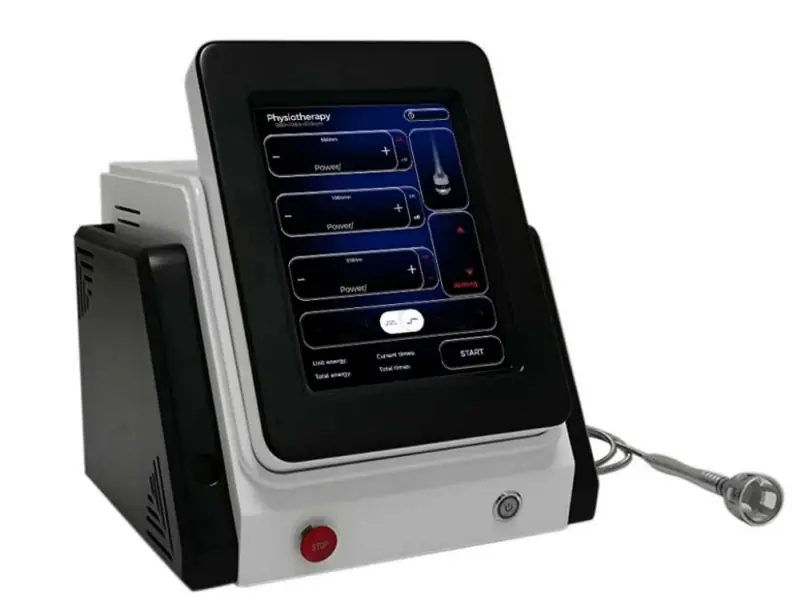
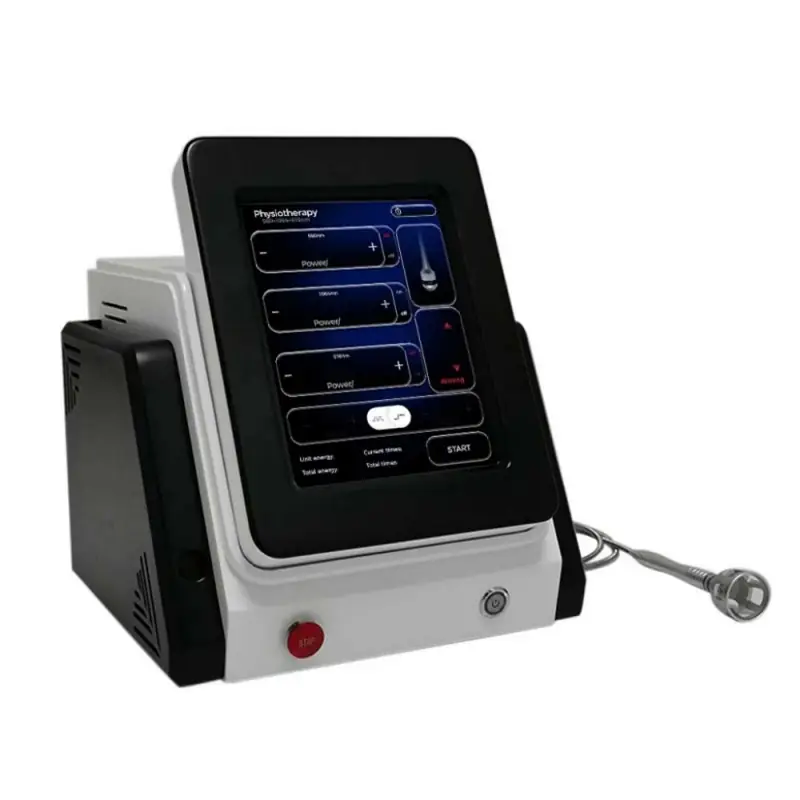
The listed JingBow configuration includes three wavelengths, pulse and continuous modes, fiber-optic coupling, and three treatment heads. These features provide a starting point for technical comparison, but buyers should confirm the exact configuration, documentation, and intended use before treating the product as suitable for a particular application.
Key Specifications
| Specification | Listed details |
| Equipment type | High-intensity Laser Physiotherapy machine |
| Wavelengths | 810 nm, 980 nm, 1064 nm |
| Maximum output power | 40 W |
| Operating modes | Pulse and continuous |
| Aiming beam | 650 nm |
| Cooling | Air cooling |
| Laser delivery | Fiber-optic coupling |
| Treatment heads | 3 |
| Touchscreen | 8 inches |
Three Wavelengths for Configuration Comparison
The listed wavelengths are 810 nm, 980 nm, and 1064 nm. Buyers should confirm that all three are included in the quotation and check the product documentation for the available settings and stated intended use. The presence of three wavelengths is a configuration detail, not by itself evidence of suitability for every treatment.
Pulse and Continuous Operating Modes
The machine is listed as supporting pulse and continuous modes. Buyers should check the available settings in each mode and confirm how the modes are selected. For a clinic with an established protocol, the key question is whether the documented settings match its requirements—not simply whether the product lists two modes.
Fiber-Optic Coupling with Three Treatment Heads
The listed configuration uses fiber-optic coupling and includes three treatment heads. Before ordering, confirm which heads are supplied, whether each has a distinct intended function, and whether replacements can be purchased separately. For a clinic expecting frequent use, the availability and replacement cost of compatible heads may affect ongoing operating costs. For a distributor, these details also affect spare-parts planning.
Air Cooling and an 8-Inch Touchscreen
The machine is listed with air cooling and an 8-inch touchscreen. Buyers who prefer not to install a separate water-cooling arrangement can compare this design with their available space and operating conditions. However, the cooling method alone does not establish the machine’s maintenance needs or continuous operating capability. Review the operating instructions before making that decision.
The touchscreen is part of the listed control interface. Buyers should review the available interface information and instructions to see whether the settings are clear for their intended operators.
For a clinic buying equipment for its own use, prioritize the match between the listed configuration and its intended application. For a beauty machine Supplier or distributor evaluating the machine for resale, also compare the package contents, training materials, spare-part availability, warranty terms, and destination-market documentation. These details help determine whether the product can be supplied and supported as planned.
Frequently Asked Questions
What is the maximum output power of the JingBow high-intensity Laser Physiotherapy machine?
The listed maximum output power is 40 W. Buyers should confirm the measurement basis and the specifications for the exact model being quoted.
Which wavelengths and how many treatment heads are listed?
The listed wavelengths are 810 nm, 980 nm, and 1064 nm, and the supplied specifications list three treatment heads. Confirm that all three wavelengths and all three heads are included in the final quotation.
Does the machine support both pulse and continuous modes?
Yes. The listed configuration includes pulse and continuous modes. Buyers should check the operating instructions for the settings available in each mode and how to switch between them.
What is the difference between a diode laser machine and a high-intensity Laser Physiotherapy machine?
“Diode laser” describes a laser technology, while “high-intensity laser physiotherapy machine” describes a product category or intended application. The terms are not automatically interchangeable. Buyers should refer to the device’s technical documentation, intended-use statement, and applicable product classification to determine what a specific model is designed for.
What should buyers compare before ordering a Laser Physiotherapy machine?
Compare the intended use, verified specifications, included treatment heads, safety and regulatory documentation, warranty, spare parts, and after-sales support. For a fair price comparison, make sure each quotation covers the same model, configuration, accessories, and service terms.
Conclusion
The right Laser Physiotherapy machine is not necessarily the one with the highest power or the most listed features. It is the one whose documented configuration, operating requirements, accessories, and service arrangements fit the intended use and destination market. The JingBow model’s listed three wavelengths, pulse and continuous modes, fiber-optic coupling, three treatment heads, and air cooling give buyers specific points to compare, but the final decision should be based on the exact configuration and supporting documentation.
If you are sourcing a professional high-intensity Laser Physiotherapy machine for your clinic or distribution business, contact JingBow with your intended application, target market, and technical requirements to discuss the available configuration and request a quotation.