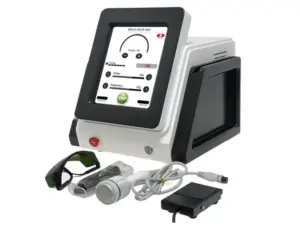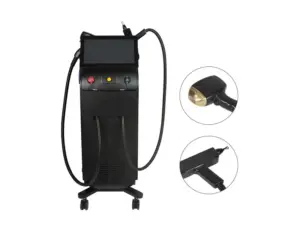
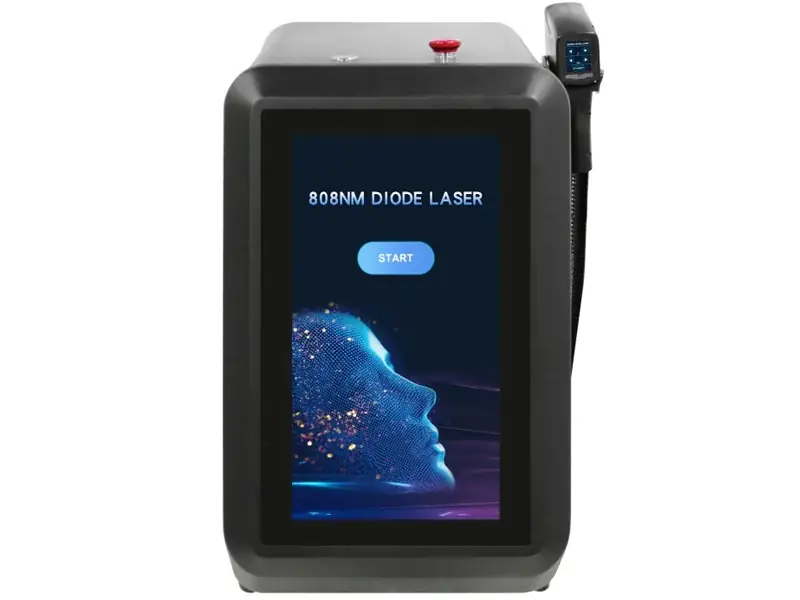
A diode laser hair removal machine is a precision optical and electronic device. During treatment, its laser modules, cooling components, power electronics, optical parts, and treatment handpiece all work together.
For professional clinics, maintenance means more than keeping the machine clean. A regular maintenance routine helps maintain stable laser output, protect the cooling components, reduce avoidable downtime, and keep treatment conditions consistent.
Key Takeaways
- Clean the treatment window or sapphire contact surface after every treatment. This helps prevent gel, skin oil, and debris from building up.
- Check the cooling system regularly. Water quality, circulation, filtration, and temperature can all affect stable operation.
- Inspect the ventilation openings and external surfaces to prevent dust buildup and heat accumulation.
- Do not use abrasive materials or harsh chemicals on optical surfaces or the treatment handpiece.
- Keep records of maintenance work and system warnings. This makes it easier to identify cooling, optical, or electrical problems before they cause major downtime.
Why Does a Diode Laser Hair Removal Machine Need Regular Maintenance?
A diode laser for hair removal needs stable light delivery, effective heat control, and reliable operation. The laser module produces energy that travels through the optical path to the treatment handpiece. At the same time, the cooling system removes the heat generated during operation.
Over time, the treatment window, cooling circuit, and ventilation areas may become contaminated. Their condition can also change with regular use. As a result, normal operation may be affected.
For this reason, maintenance is about more than cleanliness. The main goal is to identify and control problems that could affect laser output, cooling performance, or operating stability.
The treatment window, cooling circuit, and ventilation areas all need regular attention. During treatment, cooling gel, skin oil, hair, and other residue may collect on the contact surface. If the buildup is not removed, it may affect light transmission. It may also reduce cooling performance at the treatment area.
For machines that use liquid cooling, operators should check the water quality, water level, water flow, and filter condition. If cooling performance drops, the machine may show an abnormal temperature or cooling warning. Continuous treatment may then be interrupted.
Dust around ventilation openings can also restrict airflow. When airflow is reduced, heat becomes harder to release. This can affect the machine during extended operation.
Manufacturer manuals for diode laser equipment commonly include cleaning of optical surfaces. They may also require checks of cooling fans, water tanks, cooling performance, and water quality.
Regular maintenance helps identify problems before they affect normal operation. Cleaning the treatment window, checking the cooling circuit, and keeping ventilation areas clear can help maintain stable operating conditions. For clinics and distributors, this can also reduce unplanned downtime caused by cooling problems, optical contamination, or other preventable issues.
Which Parts of a Diode Laser Hair Removal Machine Need Regular Maintenance?
Not every component requires the same maintenance frequency. Operators should distinguish between routine cleaning, regular inspections, and professional servicing.
| Component | Main Maintenance Focus | Recommended Frequency |
| Treatment window / sapphire tip | Remove gel, skin oil, and debris | After every treatment |
| Treatment handpiece exterior | Keep clean and dry; check for damage | Daily |
| Machine housing | Remove dust and surface contaminants | Regularly |
| Ventilation openings and cooling areas | Keep clear and free of dust | Daily visual inspection |
| Cooling system | Monitor temperature, water flow, and warnings | Daily |
| Water / coolant circuit | Check the level and quality according to the manufacturer’s instructions | As scheduled |
| Filters | Inspect, clean, or replace according to the machine design | As scheduled |
| Cables and connectors | Check for visible damage or loose connections | Regularly |
| Laser output and calibration | Professional inspection and verification | By qualified technicians |
Maintenance intervals should not be applied to every hair removal machine in the same way. Cooling designs, water circuits, filters, treatment handpieces, and manufacturer requirements can vary between models.
1. How Should You Clean the Treatment Window and Sapphire Tip?
The treatment window is one of the parts that comes into contact with the treatment area most often. It therefore requires particular care.
During treatment, cooling gel, skin oil, hair, and other residue may collect on the contact surface. If the buildup remains, it may affect the optical interface or cooling performance.
After each treatment, use a soft, non-abrasive material with the cleaning agent recommended by the manufacturer. Do not scrape the sapphire surface with hard objects. Abrasive tools should also be avoided.
2. How Should You Maintain the Cooling System?
The cooling system is one of the most important areas to maintain in a professional laser hair removal machine. During continuous treatment, the laser produces heat that must be controlled.
Poor cooling maintenance may lead to unstable operating temperatures or warning messages. In more serious cases, it may reduce machine availability or cause damage.
| Check Item | What to Look For |
| Cooling temperature and system warnings | Check whether the temperature is within the normal range and whether any warnings appear |
| Water or coolant level | Confirm that the level meets the manufacturer’s requirements |
| Water flow | Make sure water circulation is normal |
| Visible leaks | Check the water circuit and related components for leaks |
| Pump operation | Watch for unusual noise |
| Cooling performance during extended operation | Check whether cooling remains stable during continuous use |
| Filter condition | Check whether the filter needs cleaning or replacement according to the machine design |
| Blockage or poor circulation | Look for signs of a blocked water circuit or poor coolant circulation |
3. Does the Cooling Water Need to Be Replaced on a Fixed Schedule?
There is no single replacement interval for every diode laser hair removal machine. Some manufacturers require regular water replacement. Others set different intervals based on the filtration design or coolant requirements.
For B2B buyers, the better question is not simply, “How often should the water be replaced?”
Instead, ask: “What coolant, water quality, filtration method, and maintenance schedule does the manufacturer specify for this model?”
The supplier should be able to provide this information in the technical documentation.
4. How Should You Keep the Machine Housing and Ventilation Areas Clean?
External cleaning is relatively simple, but it still matters for heat management. Dust around ventilation openings, fans, and cooling vents can restrict airflow. As a result, heat may build up inside the machine.
Before cleaning the housing, place the machine in the safe condition specified in the user manual. Use a soft cloth with a compatible cleaning solution. Keep liquids away from ventilation openings, connectors, switches, and other internal areas.
5. How Should You Maintain the Treatment Handpiece?
The treatment handpiece is the main interface between the laser device and the treatment area. It contains optical and cooling-related components. Therefore, it needs careful handling.
Operators should check the handpiece for:
- Residue on the treatment window.
- Scratches, cracks, or other visible damage on optical surfaces.
- Unusual heat during operation.
- Abnormal cooling performance.
- Damaged or excessively bent cables.
- Unusual sounds or system warnings.
What Makes a Multi-Wavelength Diode Laser Hair Removal Machine Easy to Maintain?
For beauty clinics, maintenance convenience depends largely on how easy it is to check the machine and manage the cooling circuit. The condition of key components also matters.
JingBow’s Advanced 4-Wavelength Diode Laser Hair Removal Machine, for example, includes several features that can make routine maintenance easier.

1. Real-Time Water Flow Display Makes Cooling Checks Easier
The machine provides a real-time water flow display. Operators can check the cooling circuit during routine inspections.
If the water flow becomes abnormal, they can investigate the problem promptly. They do not have to wait until a temperature or operating issue becomes obvious. This is especially useful when the machine is used continuously for extended periods.
2. Dual Filtration Helps Reduce Contaminants in the Water Circuit
JingBow uses a dual filtration system to remove metal ions and impurities from the cooling water circuit.
Keeping the water circuit clean can help reduce contaminant buildup. This may also reduce the maintenance required for the cooling circuit.
For clinics that use the machine frequently, filtration is therefore an important feature to consider when evaluating long-term maintenance needs.
3. Stable Pump and Cooling Design Makes the Cooling Circuit Easier to Monitor
The machine uses an Italian water pump together with TEC sapphire contact cooling. Stable water circulation is important for effective cooling. A clear cooling design also makes routine checks easier.
The handpiece temperature is controlled between -6°C and 1°C. During maintenance, operators should therefore check both laser output and cooling performance.
4. Long Laser Bar Life Reduces the Need for Frequent Replacement
JingBow uses imported palladium laser bars from the United States. Each laser bar has a peak power of 100W and a service life of up to 50 million pulses.
A longer service life means that the key light-emitting components may not need to be replaced as often. This can reduce replacement work over the long term.
However, laser bar life is a durability specification. It does not mean that the machine is maintenance-free. All routine maintenance should still follow the manufacturer’s requirements.
JingBow’s maintenance advantages do not come from one feature alone. Water flow monitoring, dual filtration, the water pump configuration, and long laser bar life all contribute to easier routine maintenance.
For beauty clinics, these features can make daily checks more straightforward. They may also reduce some routine maintenance work.
Frequently Asked Questions
1. Is This Diode Laser Suitable for Darker Skin Tones?
Yes. Unlike traditional single-wavelength lasers, this machine combines 940nm and 1064nm wavelengths. These wavelengths have relatively low melanin absorption and can penetrate deeper into the skin.
They are designed to target the area around the hair follicles. As a result, they can be used for darker skin tones, including Fitzpatrick skin types IV–VI. Treatment settings should always be selected according to the patient’s skin type and the manufacturer’s recommended guidelines.
2. How Long Does the Laser Handpiece Last?
The handpiece uses high-quality palladium laser bars imported from the United States. With water cooling and TEC cooling technology, the laser bars can deliver up to 50 million pulses.
This can extend service life and reduce the need for frequent replacement.
3. Do I Need to Replace the Water Filter Frequently?
Not necessarily. The machine uses a dual filtration system with an imported Italian water pump to help remove metal ions and impurities from the water circuit.
The actual filter maintenance interval should follow the manufacturer’s recommendations. Buyers should confirm the required inspection and replacement schedule before purchase rather than assume a fixed interval.
4. How Does the Cooling System Improve Patient Comfort?
The machine uses sapphire contact cooling with TEC semiconductor cooling. The treatment handpiece can be maintained at -6°C to 1°C, which helps cool the skin surface during treatment.
This cooling can improve patient comfort, especially when higher energy levels are used.
5. Can I Choose Different Spot Sizes and Power Levels?
Yes. Different configurations are available to meet the needs and budgets of clinics of different sizes.
Laser output can range from 500W to 1600W, depending on the configuration. Spot size can also vary. On the 1600W model, the largest spot size reaches 12 × 36 mm. This can help shorten treatment time for larger areas, such as the back and legs.
Conclusion
For a 790nm/808nm/940nm/1064nm four-wavelength diode laser hair removal machine, maintenance should match the machine’s design and operating requirements.
For JingBow, the key areas include TEC sapphire contact cooling, water flow, and dual filtration. Operators should also clean and inspect the treatment window and handpiece according to the manufacturer’s requirements.
If you are looking for a diode laser hair removal Supplier, contact JingBow for detailed product specifications, maintenance requirements, and technical documentation. You can also request the laser hair removal Pricelist to compare available configurations and find the option that best fits your clinic’s needs.