Key Takeaways
- Check the diode manufacturer and model instead of judging equipment quality by diode count alone.
- Confirm the exact wavelength configuration and resolve inconsistencies across technical documents.
- Ask how output power is measured and whether the stated value applies to each diode, pad, or the complete device.
- Compare treatment pad dimensions, diode distribution, connections, and replacement availability.
- Request safety and quality documents that match the exact equipment model and configuration.
Introduction
A professional body slimming machine should be evaluated through its hardware configuration and verifiable technical data. For importers, distributors, and beauty professionals, the key questions are not simply how many diodes a device contains or how many wavelengths appear in its brochure. Buyers need to understand what those figures represent, how the equipment operates, and whether the manufacturer can support it after delivery.
What Should Buyers Check in a Diode-Based Slimming Machine?
The diode source is a central component of this type of equipment. However, a recognizable brand name does not automatically confirm the performance of the complete device.
Why Do Diode Brand and Model Matter?
Different diode models may have different electrical ratings, output characteristics, operating temperatures, and service-life specifications. Even diodes from the same manufacturer may have different technical characteristics.
Buyers should request the diode manufacturer’s name, exact model number, and technical datasheet. The model number should match the equipment specification sheet or component documentation. If a supplier provides only a brand name without a model number, the information is insufficient for a detailed technical comparison.
For distributors, this documentation also helps when sourcing replacement components. A specific model number makes it easier to check whether replacement diodes are compatible with the original equipment.
Does a Higher Diode Count Mean Better Equipment Performance?
Not necessarily. A higher diode count indicates more light-emitting components, but it does not independently establish higher usable output or better treatment coverage.
Two devices may contain different numbers of diodes but use different output ratings per diode. Their total rated output may therefore differ from what the diode count alone suggests. Diode arrangement also matters: components concentrated in a small area do not provide the same coverage as components distributed across a larger treatment surface.
Buyers should compare three figures together: total diode count, output per diode, and the number and dimensions of treatment pads. Ask for a distribution diagram if the supplier claims that the diodes are evenly arranged.
What Diode Information Should Buyers Request?
A useful technical file should identify the diode manufacturer, model, quantity, rated output, operating conditions, and stated service life. It should also explain whether the output value refers to an individual diode or another measurement point.
A slimming machine supplier should be able to explain these figures clearly. If the quotation and technical datasheet show different diode models or quantities, request corrected documents before paying a deposit.
How Should Buyers Evaluate Wavelengths and Laser Output?
Wavelength and output figures are meaningful only when the manufacturer explains how they are configured and measured.
How Can Buyers Verify Multiple Wavelength Configurations?
Wavelength is measured in nanometres (nm). A specification listing several wavelengths should identify each value clearly and confirm whether all listed wavelengths are included in the supplied configuration.
Do not assume that a device described as having six wavelengths necessarily emits all six simultaneously. Ask whether the wavelengths operate together, independently, or through different treatment settings. The manufacturer should also explain whether each wavelength uses a separate diode type.
Check the brochure, technical datasheet, user manual, and quotation against one another. If one document lists 650 nm while another lists 660 nm, the discrepancy must be resolved in writing before the order is confirmed.
How Should Buyers Compare Laser Output Power?
Output power is commonly expressed in milliwatts (mW) or watts (W). However, a number without a measurement basis is difficult to compare.
Ask whether the stated output is the rated output of one diode, one lamp or module, one treatment pad, or the measured output at the treatment surface. Also confirm whether the figure applies to continuous mode, pulse mode, or both.
Rated output and measured output are not necessarily the same. Component specifications describe the diode under defined test conditions, while measurements from an assembled device may be affected by its electrical and optical design. For a meaningful comparison, request the test method, measurement position, operating mode, and tolerance.
Do not compare two devices until their measurement units and test conditions are consistent. A per-diode rating should never be treated as the total output of the complete machine.
What Is the Difference Between Continuous and Pulse Modes?
Continuous mode maintains output while the device is operating. Pulse mode delivers output in repeated intervals. These modes describe how output is delivered, not the overall quality or suitability of a device.
For pulse mode, request the pulse frequency, pulse width, and duty cycle if these parameters are available. Frequency indicates how often pulses occur, pulse width describes the duration of each pulse, and duty cycle represents the proportion of time the output is active within a cycle.
If the manufacturer lists only “continuous” and “pulse,” ask for the user manual or a technical explanation. Do not assume a particular frequency or intensity simply because pulse mode is available on the control screen.
How Do Treatment Pad Design and Machine Configuration Affect Purchasing Decisions?
Treatment pads are used during routine operation. Their dimensions, connections, and maintenance requirements affect equipment handling, cleaning, and servicing.
How Should Buyers Compare Large and Small Treatment Pads?
Compare the dimensions and number of each pad size rather than relying on descriptions such as “large-area coverage.” Ask for the actual treatment surface dimensions and the intended function of each size.
Larger pads may cover a broader area in one placement, while smaller pads may be easier to position in narrower or more localized areas. However, pad size alone does not confirm treatment coverage. Buyers should also request the diode count per pad and a layout diagram showing the light-source distribution.
If a supplier claims that several pads can operate simultaneously, confirm the maximum number that can run at the same time. Also ask whether each pad has independent settings or whether all connected pads share the same operating parameters.
What Should Buyers Check About Pad Connections and Replacement Parts?
A treatment pad is not a standalone component. Its connector, cable, control interface, and compatibility with the main unit all matter.
Before ordering, ask for photographs of the connectors and the cable specifications. Confirm whether pads can be replaced individually and whether replacement parts are available for the exact model. If the device uses different pad sizes, check whether each type has a separate part number.
For distributors, replacement availability should be included in the after-sales agreement. A low initial purchase price may become less attractive if a damaged pad requires replacement of a larger assembly or if compatible parts are difficult to obtain. Ask whether the supplier can provide a spare-parts list and identify the components that require periodic inspection.
How Do Cooling and Operating Conditions Affect Equipment Reliability?
Diode modules and internal electronic components generate heat during operation. The cooling design must therefore provide sufficient heat removal under the equipment’s specified operating conditions.
For an air-cooled device, check the position of the air inlets and outlets. They should not be blocked by walls, nearby equipment, or the way the machine is installed. Ask whether fan openings require routine cleaning, whether filters need replacement, and what ventilation clearance the manufacturer recommends.
Also confirm the ambient temperature and humidity limits, recommended operating cycle, and any restrictions on extended use. A cooling fan alone does not prove that a device can operate continuously. The user manual should explain the maintenance schedule and operating limits.
Which Safety and Quality Documents Should Buyers Request?
Request the Declaration of Conformity, applicable test reports, electrical specifications, user manual, and product labels. Check that the documents identify the same manufacturer, model, and configuration as the equipment being purchased.
IEC 60825-1 addresses the classification and safety requirements of laser products, including hazard evaluation, protective measures, labels, and manufacturer information. IEC 60601-1 concerns basic safety and essential performance of medical electrical equipment. Whether a particular standard applies depends on the product’s intended use and regulatory classification. A reference to a standard is not proof that the device has been tested or certified against it.
For international distribution, confirm the requirements of the destination market and request documents that match the actual product model. A general statement such as “CE approved” is not a substitute for checking the relevant conformity documentation.
Why Choose JingBow 6D LipoLaser Slimming Machine?
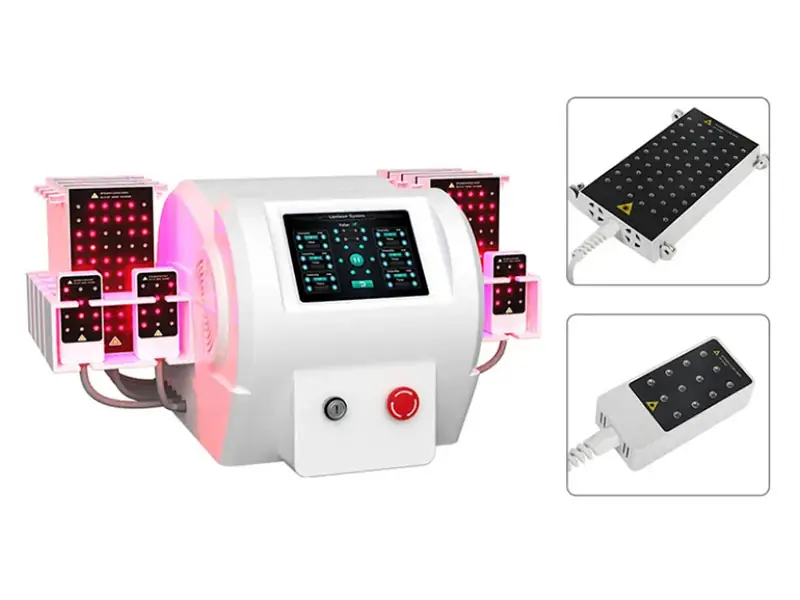
For buyers comparing a body sculpting machine with a diode-based configuration, the published specifications provide a starting point for checking the light source, wavelength options, pad quantity, and machine layout.
| Item | Published specification |
| Product | 6D Diode Lipo Laser Slimming Machine |
| Diode source | Japan Mitsubishi, model ML101J27 |
| Total diode quantity | 528 pcs |
| Listed wavelengths | 635 nm, 650 nm (also shown as 660 nm), 810 nm, 830 nm, 940 nm, 980 nm |
| Treatment pads | 12 pcs: 8 large and 4 small |
| Output and modes | 100–350 mW per lamp listed; continuous and pulse modes |
| Cooling and screen | Air-cooled; 8-inch TFT touch screen |
| Electrical supply | 110 V/220 V, 50–60 Hz |
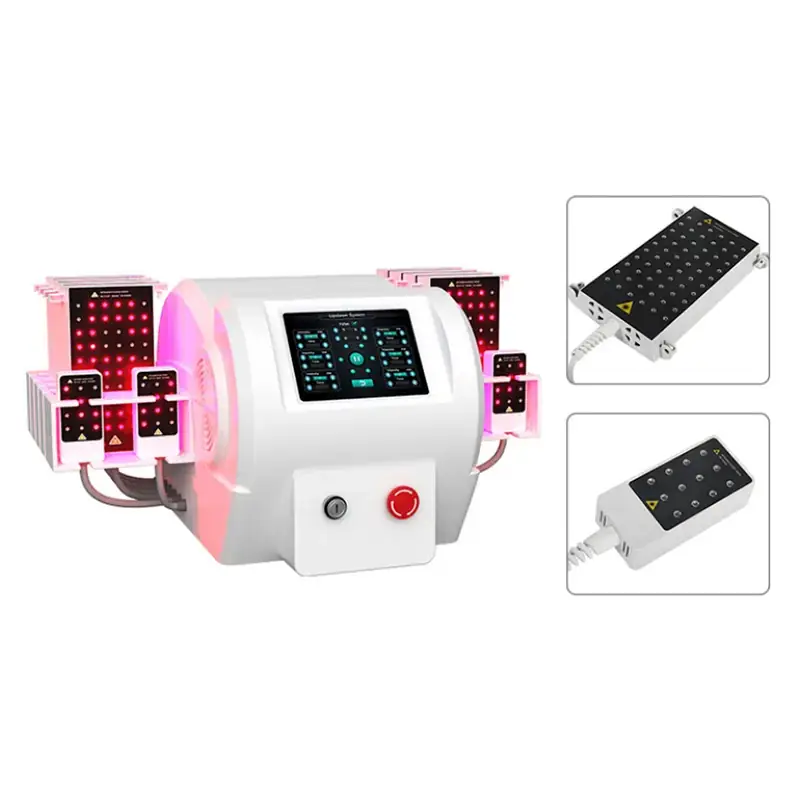
528 Mitsubishi Diodes and Six-Wavelength Configuration
The product page identifies Mitsubishi diodes, model ML101J27, with a total quantity of 528. It also lists six wavelength values. Buyers should check these details against the final order documents.
One point requires written confirmation: the product information shows both 650 nm and 660 nm. Ask JingBow to confirm the exact wavelength supplied and ensure that the same value appears on the quotation, specification sheet, and user manual.
The page also lists an output of 100–350 mW per lamp. Before comparing this figure with another weight loss machine, ask the manufacturer to define “per lamp,” confirm the measurement method, and clarify whether the range applies to pulse mode only. This figure should not be treated as the verified total output of the complete device.
Twelve Treatment Pads in Two Sizes
The listed configuration includes 12 treatment pads: eight large and four small. Two pad sizes give operators different physical formats for positioning the equipment during use.
The product page does not specify the exact dimensions, diode count per pad, or treatment surface area. Buyers should request these details before confirming an order. It is also important to verify whether all 12 pads can operate simultaneously and whether the device supports independent pad control.
For distributors, these details help establish an accurate product description and spare-parts list. They also help sales teams explain the actual configuration to professional customers without making unsupported claims about coverage.
Air-Cooled Design and Portable Equipment Configuration
The device uses air cooling and has an 8-inch TFT touch screen. Its published electrical options are 110 V and 220 V at 50–60 Hz. Buyers should confirm the required voltage before production, especially when ordering for markets with different electrical supply standards.
The product page lists a gross weight of 30 kg and packing dimensions of 49 × 66 × 59 cm, with an aluminium transport case. These figures are useful when estimating freight, storage, and handling requirements. Confirm whether the quoted weight and dimensions apply to the complete export package.
For routine operation, buyers should also ask about screen functions, menu languages, and the availability of user instructions for different markets. These details affect staff training and the ease of introducing the equipment to new operators.
Frequently Asked Questions About Diode-Based Body Slimming Machines
Does the Published Diode Output Represent the Total Machine Output?
Not necessarily. The product page lists 100–350 mW per lamp, but this does not establish the total output of the complete device. Buyers should ask whether the figure refers to one diode, one lamp, or another component, and whether it applies to continuous mode, pulse mode, or both. The manufacturer should provide the measurement method and test conditions before the figure is used for technical comparison.
How Many Diodes Does the JingBow 6D LipoLaser Machine Have?
The published product page lists 528 Mitsubishi diodes, model ML101J27. It does not provide a diode distribution diagram or the exact quantity in each treatment pad. Buyers who need these details should request a pad-level layout from the manufacturer.
Can All Twelve Treatment Pads Operate at the Same Time?
The product page lists 12 pads but does not provide enough technical detail to establish the maximum number that can operate simultaneously. Buyers should confirm the operating limit, independent control options, and any output changes when multiple pads are connected.
What Is the Difference Between Continuous and Pulse Laser Modes?
Continuous mode delivers output without repeated pulse intervals while operating. Pulse mode delivers output in separate intervals. To compare the two modes technically, request the pulse frequency, pulse width, duty cycle, and output values for each mode. These details should come from the manufacturer rather than being assumed from the mode names.
How Long Can Laser Diodes Operate Before Replacement?
Service life varies by diode model, operating conditions, temperature, and maintenance. A stated lifetime is not a guaranteed replacement date. Request the component manufacturer’s datasheet and ask how lifetime is defined, what test conditions are used, and what output level indicates that replacement is necessary.
Conclusion
For clinics and distributors, a device’s long-term value also depends on how easily staff can learn its controls, how clearly operating information is presented, and how efficiently service issues can be handled. A clear user manual can shorten staff training, while useful diagnostic information can help technicians narrow down faults before arranging repairs. Accessible spare parts and responsive technical support also matter when a device becomes part of a clinic’s daily service schedule or a distributor’s product portfolio.
If you are sourcing a beauty machine for your clinic or distribution business, contact JingBow with your planned services, target market, and technical requirements to discuss a suitable configuration and request a quotation.