Chronic musculoskeletal pain and erectile dysfunction (ED) are two of the most common yet stubborn conditions affecting quality of life globally. For decades, patients have navigated a maze of painkillers, injections, and even surgical interventions — often with mixed results and unwanted downtime. In recent years, a non-invasive technology has quietly reshaped clinical practice: the shockwave therapy machine.
More precisely, this refers to a professional extracorporeal shock wave therapy (ESWT) platform that uses focused acoustic energy to stimulate deep tissue repair and neovascularization. This article examines what focused shockwave therapy is, how it works, the clinical evidence behind it, and what to look for in a reliable device — drawing on manufacturer specifications, peer-reviewed research, and practical treatment protocols.
What Is Extracorporeal Shock Wave Therapy (ESWT)?
Extracorporeal shock wave therapy (ESWT) is a noninvasive technique that delivers high-energy acoustic waves through the skin to injured tissues, triggering regeneration and reducing pain without the need for medication or surgery. Unlike many traditional modalities, ESWT targets the root cause of chronic inflammation and poor blood supply rather than merely masking symptoms.
A focused unit distinguishes itself from radial (unfocused) devices by concentrating acoustic energy at a precise focal zone deep within the tissue. Radial devices disperse energy over a broader treatment area and are generally used for more superficial indications, whereas focused systems concentrate energy at a defined depth. In contrast, focused shockwave technology — sometimes abbreviated FSWT — can reach pathologic structures lying at depths of up to 70 mm (7 cm) while minimizing discomfort at the skin level. This precision makes it particularly valuable in physiotherapy, orthopedics, and vascular urology, where deep-seated lesions are common.
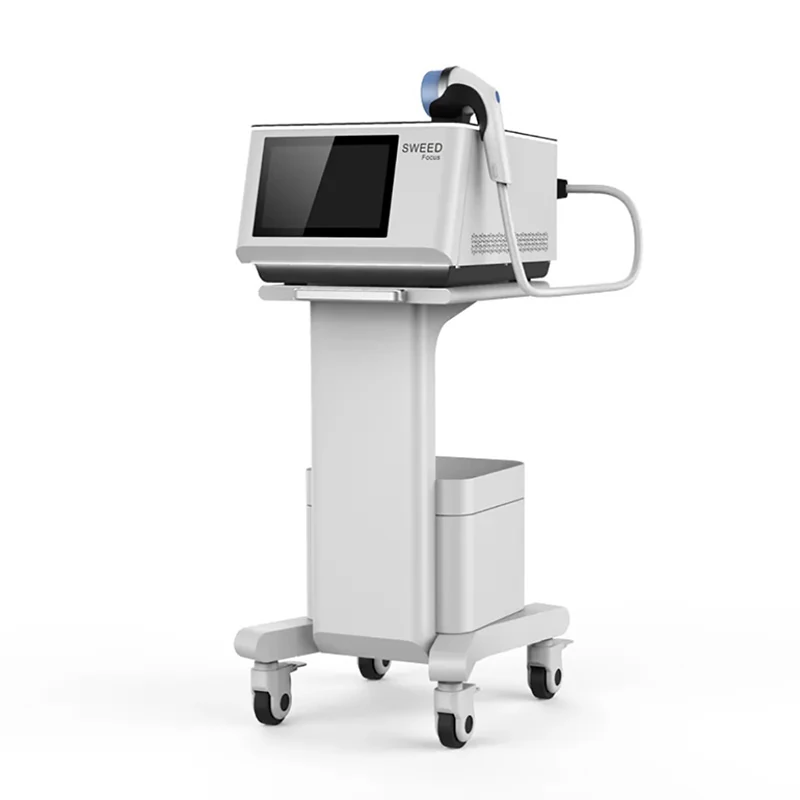
Why Focused Shockwave Therapy Stands Out
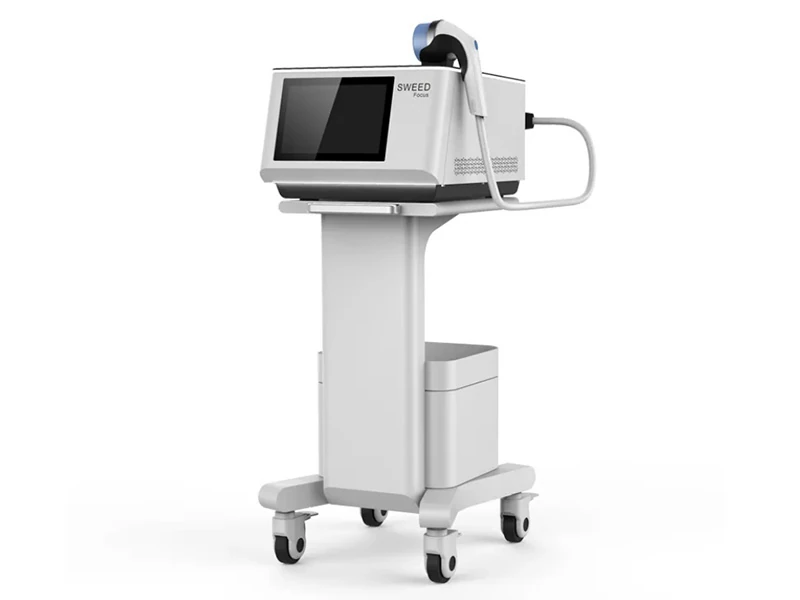
A well-designed shockwave therapy machine integrates several core technologies that distinguish it for professional use. These include accurate focal depth control, dual handpiece configurations, and advanced cooling systems. The acoustic wave can be focused at specific depths, such as 15 mm, 20 mm, or 46 mm. This flexibility allows clinicians to tailor treatment to individual anatomy.
Many professional units also include both a standard shockwave handle for orthopedic applications and a dedicated ED (erectile dysfunction) handle, ensuring appropriate energy delivery for each indication. Advanced internal water-cooling systems and integrated firing discs prevent overheating during successive treatments, which helps maintain consistent pulse intensity. Additionally, a large color touchscreen with preset clinical protocols reduces setup time and supports standardized care.
These engineering choices are often influenced by the manufacturer’s broader expertise. The JB-SW7, for instance, is produced by an experienced beauty machine Manufacturer that has applied its precision engineering capabilities from the aesthetic device field to professional physiotherapy equipment. This cross-domain background often translates into robust industrial design, intuitive software interfaces, and strict quality control — qualities that benefit both medical and wellness providers.
How Does a Focused Shockwave Therapy Machine Work? A Typical Treatment Process
For practitioners new to ESWT, a standardized session usually follows several clear steps. First, the clinician palpates the area of maximum tenderness or uses diagnostic imaging to identify the exact target tissue — whether an inflamed plantar fascia insertion or a calcific deposit in the shoulder. Using the device’s touchscreen, the operator then selects a clinical prescription, adjusting frequency between 60 and 180 pulses per minute, energy level, and number of shocks — often guided by built-in protocols.
A water-based ultrasound gel is applied to the skin to ensure efficient acoustic transmission. The handpiece is then positioned to deliver focused waves to the predetermined depth. For musculoskeletal conditions, a shockwave therapy machine is moved slowly over the region; for ED, the ED-specific handle is applied along the penile shaft and crura in accordance with vascular mapping. Post-treatment, patients are typically advised to avoid high-impact activity for 24–48 hours, and multiple sessions — usually once a week — are planned based on the condition’s chronicity.
Throughout the process, the integrated water-cooled circuit of a device like the JB-SW7 keeps heat within an optimal window, ensuring that the prescribed energy is delivered reliably from the first pulse to the last.
Clinical Applications and the Evidence Base
Chronic Musculoskeletal Pain
One of the strongest areas of evidence for focused ESWT is chronic plantar fasciitis. A systematic review and meta-analysis of randomized controlled trials, published in the Journal of Orthopaedic Surgery and Research, found that extracorporeal shock wave therapy significantly reduced pain and improved functional outcomes compared with placebo, and the benefits persisted at long-term follow-up (Source: Sun J, Gao F, Wang Y, et al. Extracorporeal shock wave therapy for plantar fasciitis: a systematic review and meta-analysis of randomized clinical trials. J Orthop Surg Res. 2017;12(1):136.). Similar positive findings have been reported for Achilles tendinopathy, lateral epicondylitis (tennis elbow), and calcific tendinitis of the shoulder.
A professional system delivers mechanical energy that is thought to break down disorganized scar tissue, promote the release of local growth factors, and stimulate angiogenesis — the formation of new blood vessels. This mechanism addresses the hypoxic environment that perpetuates chronic tendon pain.
Vascular Erectile Dysfunction (ED)
The application of focused shockwave therapy for ED has gathered substantial clinical interest. A meta-analysis published in the Journal of Sexual Medicine evaluated low-intensity extracorporeal shockwave therapy and concluded that it produced statistically significant improvements in erectile function scores, with benefits maintained for at least three months (Source: Clavijo RI, Kohn TP, Kohn JR, Ramasamy R. Effects of Low-Intensity Extracorporeal Shockwave Therapy on Erectile Dysfunction: A Systematic Review and Meta-Analysis. J Sex Med. 2017;14(1):27-35.). The proposed mechanism involves microtrauma-triggered neovascularization within the corpus cavernosum, leading to enhanced blood flow and improved endothelial function through a non-pharmacological treatment approach.
Because the focused shockwave therapy machine can be precisely tuned to deliver energy at the required tissue depth without damaging superficial structures, it has become a treatment option for men who are intolerant of phosphodiesterase-5 inhibitors or who seek a non-pharmacological treatment option aimed at improving vascular function.
Key Specifications at a Glance
The following table summarizes the technical parameters of a typical professional focused shockwave unit. These data reflect manufacturer-provided information and are representative of the device class.
Table 1. Technical Specifications of a Professional FSWT Device
| Parameter | Details |
| Technology | Focused Extracorporeal Shock Wave Therapy (FSWT/ESWT) |
| Penetration Depth | Up to 70 mm (available focal depths: 15 mm, 20 mm, 46 mm) |
| Trigger Frequency | 60–180 pulses/min |
| Treatment Handles | SW handle and dedicated ED handle (optional) |
| Presets | 13 built-in clinical prescriptions |
| Display | 10.1-inch color touchscreen |
| Cooling System | Water-cooled integrated firing disc (pure water, cup-type refilling) |
| Connectivity | Wi-Fi for remote software upgrades |
| Design | Desktop with optional mobile cart |
| Package | Secure aluminum transport case |
What to Consider When Choosing a Device
Selecting a shockwave therapy machine for clinical use involves balancing therapeutic performance, reliability, and after-sales support. Features such as water-cooled firing discs, guided focal depth options, and dual-handle configurations directly influence treatment outcomes.
Working with a supplier that possesses cross-disciplinary manufacturing experience — as a seasoned beauty machine Manufacturer often does — can mean better-integrated hardware, responsive software updates, and longer service life. It is prudent for prospective buyers to examine real-world usage data, request peer-reviewed references where possible, and ensure that the device aligns with the scope of practice in their jurisdiction.
No single machine suits every clinical need. However, a focused ESWT platform with transparent specifications and a track record in both orthopedic and vascular applications represents a solid starting point.
Frequently Asked Questions
Q1: Is treatment with a shockwave therapy machine painful?
A: Most patients describe the sensation as deep tapping or mild discomfort over the target area. Focused machines generally produce less skin-level pain compared to radial devices, and clinicians tailor intensity settings to individual tolerance.
Q2: Can a device produced by a beauty machine Manufacturer be trusted for medical therapies?
A: Yes, provided the manufacturer adheres to relevant medical device regulations and quality systems. A competent beauty machine Manufacturer often brings strong expertise in ergonomics, precision energy control, and user-interface design — all of which enhance the reliability of therapeutic equipment. The key is to verify compliance with regional medical device directives and request documented performance data.
Q3: How many sessions are needed for erectile dysfunction?
A: Clinical protocols frequently involve 6 to 12 sessions, usually administered once or twice weekly. Positive effects may accumulate over several weeks as vascular remodeling progresses.
Q4: Are there any contraindications?
A: Shockwave therapy is generally not recommended for patients with bleeding disorders, those on anticoagulant therapy in the treatment region, or individuals with malignancies at the application site. A thorough medical history and physical examination should precede treatment.
Conclusion
Focused shockwave therapy is neither a panacea nor a replacement for comprehensive medical evaluation. Yet when applied with appropriate protocols, a professional shockwave therapy machine offers a meaningful, non-invasive pathway for chronic pain relief and vascular erectile dysfunction — one supported by a growing body of clinical evidence.
By choosing equipment from an experienced medical aesthetics and physiotherapy equipment manufacturer that understands precision engineering and human-centered design, clinics can offer patients a therapy that prioritizes safety, consistency, and measurable improvement.